
 If you are considering building a new structure on your property but aren’t sure whether a pole barn vs metal building would best suit your needs, our team at Champion Buildings is here to help. Both wooden structures and steel structures have their advantages and disadvantages, making the decision between a wood pole barn vs metal building structure dependent on your property, budget, and usage needs.
Join our pre-engineered steel building experts as we help you choose the best type of agricultural building for your home or business.
Table of Contents
- What is a Pole Barn?
- What is a Metal Building?
- Pole Barn vs Metal Building Pros and Cons
- How Long Will A Pole Barn vs Metal Building Last?
- Key Factors for Choosing a Pole Barn vs Metal Building
- Common Pole Barn vs Metal Building Uses
- Pole Barn vs Metal Building FAQs
- Contact Our Experts In Custom Metal Buildings Today
What is a Pole Barn?
A pole barn is a type of wood building constructed using poles or posts embedded in the ground for support. These poles are typically made of wood, although sometimes metal or concrete posts are used. The roof trusses of pole barns sit on top of those poles, and the exterior may include siding or exterior metal panels.
Pole barns are often used for agricultural purposes—such as storing equipment, hay, and livestock—but can also be used for residential or commercial needs.
What is a Metal Building?
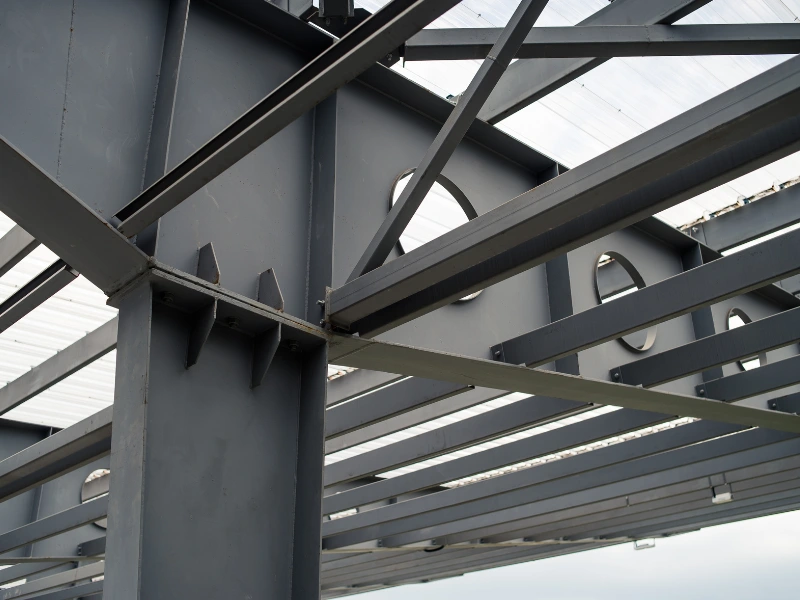
A metal building is constructed with a structural steel frame, steel roof system, and steel wall panels. In a metal building, nearly all the load-bearing structure is made from top quality, galvanized, U.S. steel, rather than relying on wood framing or embedded poles. These steel buildings are engineered off-site, with parts manufactured to exact dimensions, then assembled on-site.
Metal buildings—including metal agricultural buildings—are used across commercial, industrial, agricultural, and residential applications due to their flexibility, strength, and faster construction time.
Pole Barn vs Metal Building Pros and Cons
Let’s take a closer look at the advantages and disadvantages of each building type.
Pole Barn Advantages
|
Metal Building Advantages
|
Pole Barn Disadvantages
|
Metal Building Disadvantages
|
 How Long Will A Pole Barn vs Metal Building Last?
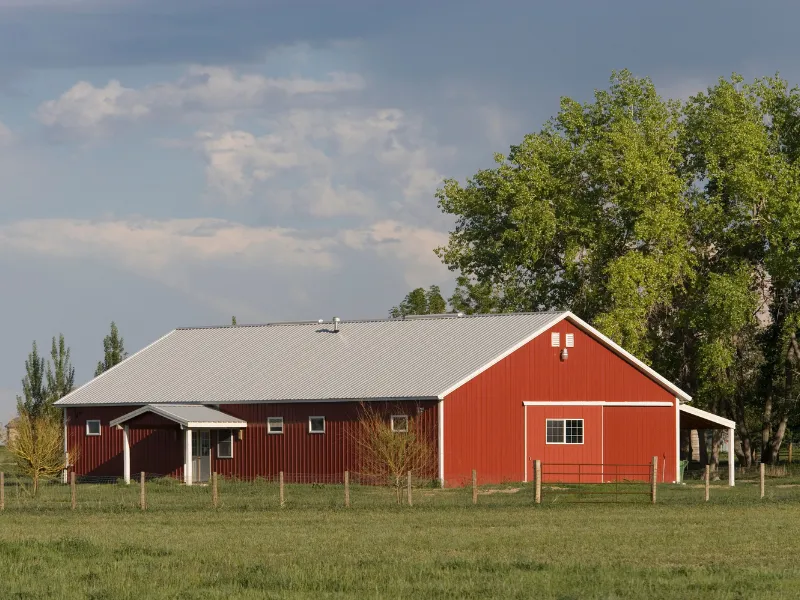
Steel buildings are known for their durability and longevity. A well-built steel building can last for several decades longer than wooden pole buildings. They also require less maintenance than other types of buildings and experience less natural deterioration than a wood pole barn construction might see, which can save you time and money over the long term.
Key Factors for Choosing a Pole Barn vs Metal Building
Before deciding between a pole barn vs metal building, it’s important to consider how each performs in areas like construction, cost, durability, and long-term maintenance. The right choice depends on your intended use, location, and budget. Below, we compare the most important factors to help guide your decision.
Construction Materials and Structural Frame
Pole barns rely on wooden poles or posts—often chemically treated—set in the ground or minimal footings to support the walls and roof trusses. This type of wood framing makes them simple to build but vulnerable to rot, insects, and shifting over time.
Metal buildings, on the other hand, are engineered with steel columns, beams, and panels that fit precisely together. These steel structures resist fire, pests, and weather damage while supporting wider clear spans and taller eave heights, making them stronger and more adaptable overall.
Initial and Long-Term Costs
Pole barns typically have a lower upfront cost thanks to inexpensive materials and reduced labor needs. However, when you add a concrete foundation or high-end finishes, costs can rise quickly.
Metal buildings require a higher initial investment for materials and specialized labor, but they often deliver better long-term value. With less maintenance and a longer lifespan, the life-cycle cost of a steel building is usually lower.
For example, a 40×60 metal building might cost $12–$20+ per sq. ft., while a comparable pole barn could range from $8–$15+ per sq. ft.
Design Flexibility and Future Use
Pole barns are ideal for smaller or moderate structures like workshops, garages, or storage barns. They offer open interiors but can be limited in height or clear span without added expense.
Metal buildings are far more flexible—allowing customization options for wider spans, taller eaves, and varied door placement for large equipment or commercial use. If you plan to expand or repurpose the structure later, a steel building provides greater adaptability and long-term potential.
Foundation and Floor Considerations
Pole barns can be constructed on a simple dirt floor or minimal footings, making them affordable for agricultural or basic storage use. However, for garages or finished spaces, a concrete foundation is necessary to improve strength and usability.
Metal buildings almost always require a concrete slab or engineered foundation to properly anchor the steel frame. While this adds to upfront cost, it provides a stable, controlled environment that increases longevity and performance.
Durability and Maintenance
Pole barns face natural deterioration over time, as wood framing can rot, warp, or attract pests—especially when exposed to moisture. Even with proper treatment, they demand regular upkeep to remain functional.
Metal buildings excel in long-term durability, requiring minimal maintenance. Their steel framing resists corrosion, fire, and weather damage, with many lasting 40–70 years or more when properly maintained.
Site Conditions and Building Codes
Pole barns may be sufficient for mild climates and rural areas, but buried wooden posts can shift or decay in wet or unstable soil. Some municipalities also restrict their use for commercial purposes.
Metal buildings perform better in regions with heavy snow, strong winds, or hurricanes due to their engineered design and fire-resistant materials. They’re also more likely to meet local building codes for occupancy or business use, especially when engineer-stamped plans are required.
Common Pole Barn vs Metal Building Uses
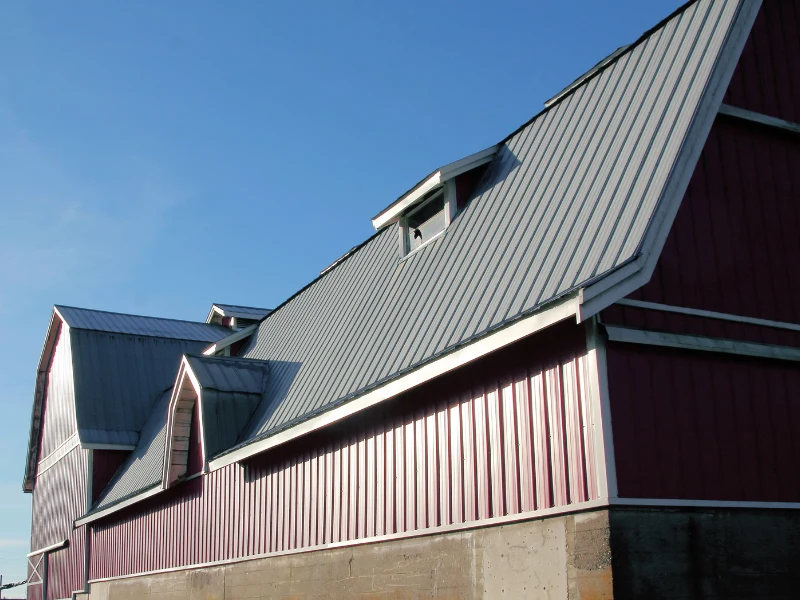
Pole barns are also ideal for the storage of farm equipment, vehicles, boats, and other large items. They provide ample space for workshops, garages, and repair shops, making them popular for DIY projects, woodworking, and automotive repairs.
Prefabricated metal buildings can be used for a variety of building types, from metal garages, metal barns, and metal workshops to prefabricated steel commercial buildings for offices, restaurants, or retail space, steel community buildings for fire departments or municipal space, metal self-storage buildings, and more.
Here are some scenarios to help you decide whether a pole barn vs metal building is the better choice for your needs.
Equipment Storage and Basic Agricultural Use
If your primary goal is storing farm equipment, tractors, hay, or small livestock, a pole barn can be a lower-cost, quick solution. Its simple post-frame design works well for basic, open storage without extensive finishes. That said, a metal building brings longer lifespan, better pest and fire resistance, and wider clear spans if your equipment fleet grows.
Workshop, Garage, Residential Use, RV Storage
For hobby shops, garages for recreational vehicles, home-business spaces, or light retail and office spaces, a metal building is typically the better long-term investment. Steel framing supports insulation, climate control, and interior build-outs more easily. If budget is tight, a pole barn can start you fast—while a metal building offers durability and easier upgrades over time.
Large Commercial, Industrial, and Multi-Use Structures
When you need high ceilings, large door openings, heavy crane loads, or unobstructed floors, metal buildings shine. Pre-engineered steel delivers wide clear spans, taller eave heights, and predictable performance for code-heavy uses. A pole barn may still serve as a cost-effective auxiliary structure alongside the main steel facility.
Harsh Climates and Long-Term Ownership
In regions with high winds, heavy snow, hurricanes, or extreme temperature swings, metal buildings offer superior durability and lower maintenance. Engineered steel frames handle environmental loads and fire risk more reliably. While a pole barn can work with upgrades, steel typically provides the best life-cycle value over 20–30+ years.
Uneven or Remote Terrain
On mildly uneven ground, a pole barn can adapt with stepped post depths and minimal grading, helping control upfront site costs. Metal buildings can also perform very well on challenging sites using engineered pier foundations, grade beams, or stepped slabs that precisely match the terrain. If access is limited, panelized steel components can still be delivered and erected efficiently with the right equipment plan.
Mega-Scale Industrial and Logistics Projects
For distribution centers, manufacturing lines, aircraft hangars, or large ag-processing plants, metal buildings are the go-to choice. Their modular steel frames scale efficiently, support heavy mechanical loads, and streamline permitting with engineered drawings. Pole barns may complement these campuses as economical, non-critical storage or equipment sheds adjacent to the main steel structure.
Pole Barn vs Metal Building FAQs
How long does a pole barn last compared to a steel building?
In general, a well-built metal building will last significantly longer than a wooden pole barn. A metal building can last 40-70 years or longer with proper maintenance, while a pole barn constructed with wood materials typically has a lifespan of 20-30 years.
Are steel buildings more expensive than pole barns?
Yes, in many cases steel buildings have a higher upfront cost than pole barns due to structural steel, engineered design, robust foundations, and higher finish levels. However, steel buildings may offer lower lifetime cost thanks to reduced maintenance, fewer repairs, longer life, better durability and possibly lower insurance and higher property value.
Which option is better for extreme weather conditions?
If you live in an area that experiences extreme weather conditions—such as high winds, heavy snow loads, hurricanes, seismic activity—a metal building may be a better option than a pole barn. Steel buildings are designed to be highly durable and can be engineered to withstand these forces, and they are resistant to pests, rot, fire and corrosion which can be advantages in harsh environments
How much does a 40×60 metal building cost with a slab?
While it varies, a 40×60 (2,400 sq ft) metal building with concrete slab and basic finish might run in the $12-$20+ per sq ft range, yielding $29,000–$48,000+ depending on region, site prep, insulation, doors, windows, and finishes. Always obtain a manufacturer’s quote from your region and include all foundation, site preparation, utilities and finishes.
Contact Our Experts In Custom Metal Buildings Today
At Champion Buildings we design and build customizable steel buildings—from metal barns to commercial and residential steel structures. Our experienced team will work with you starting at the design stage through fabrication and erection of the steel building.
Whether you are thinking about a metal barn, a large steel shop, equipment storage, or a hobby facility for recreational vehicles, we can guide you through the best choice for your budget, needs, and property space.
Contact us today by calling (800) 942-6812 or filling out our contact form to get started.